
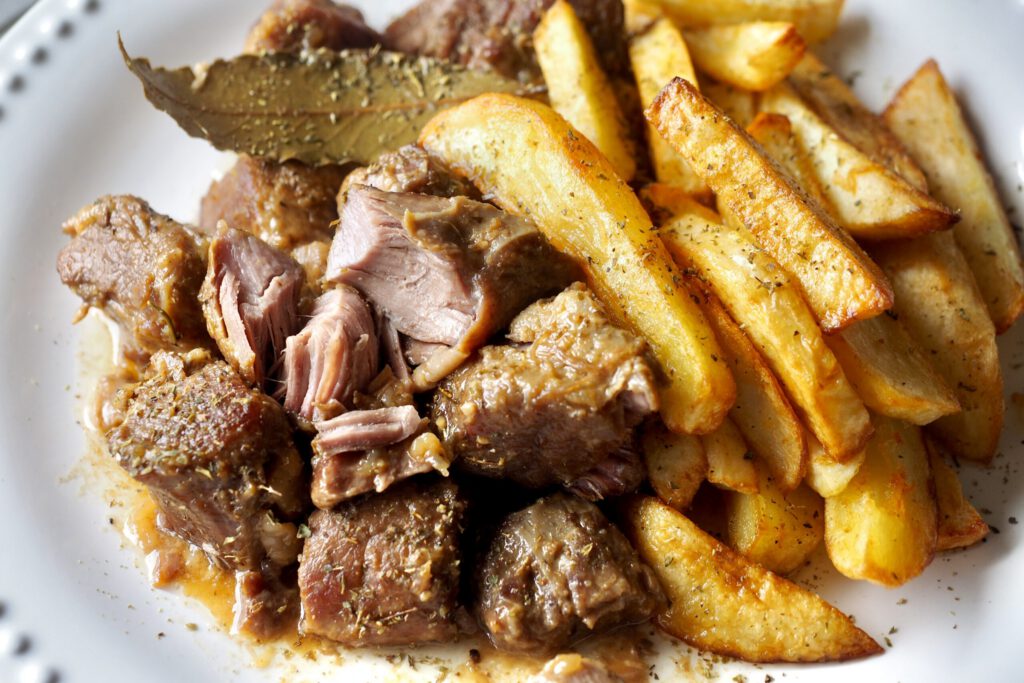
If you’ve traveled through the rugged mountains of Crete, especially the region of Sfakia, you may have come across one of the island’s most rustic and beloved dishes: tsagariasto. This slow-cooked lamb recipe is deeply woven into Cretan pastoral life, where sheep and goats roam freely and cooking traditions have been passed down unchanged for centuries.
The name tsagariasto comes from the word tsagari, an old term referring to a deep pan or pot used by shepherds. Historically, the dish was prepared outdoors over an open flame, using only what was immediately available: lamb from the flock, olive oil, salt, and wild herbs picked from the surrounding hills. With minimal ingredients and no complicated techniques, tsagariasto is a celebration of simplicity — but don’t be fooled: the flavor is rich, aromatic, and intensely savory.
Shepherds would often prepare tsagariasto during long days in the mountains. They cooked the meat slowly, letting the lamb sear in olive oil until browned before allowing it to gently simmer in its own juices. The technique resulted in tender meat that practically falls apart, infused with the earthy flavors of Cretan oregano and thyme.
Today, tsagariasto is served in Cretan tavernas and family tables, often accompanied by potatoes or village-style handmade pasta. While the dish has evolved slightly with the addition of wine or vegetables in some homes, the essence remains the same: pure ingredients, slow cooking, and respect for tradition.
Below is a home-friendly version that stays faithful to the original spirit of the dish.
Tsagariasto Lamb — Traditional Cretan Recipe
Ingredients (Serves 4)
- 1.5 kg (3 lbs) lamb shoulder or leg, cut into large chunks
- 80–100 ml (⅓–½ cup) high-quality Cretan olive oil
- 2 cloves garlic, lightly crushed (optional — some traditional versions omit it)
- 1 small onion, finely chopped (optional but common in home kitchens)
- 1 tsp dried Cretan oregano (or Greek oregano)
- 1 tsp dried thyme
- Salt and freshly ground black pepper
- 100 ml (about ½ cup) white wine (optional but widely used today)
- 1 cup water or lamb broth, as needed
Optional additions:
- 4–5 small potatoes, quartered
- Fresh rosemary sprigs
Step-by-Step Instructions
1. Heat the Olive Oil
Place a large heavy pot (a Dutch oven or deep pan) over medium-high heat. Add the olive oil and allow it to heat until shimmering.
2. Brown the Lamb
Add the lamb pieces in batches so as not to overcrowd the pot. Brown them well on all sides — this step is essential for building flavor.
3. Add Aromatics (If Using)
Push the meat to one side and add the onion and garlic. Cook for 2–3 minutes until slightly softened and fragrant.
4. Season
Sprinkle in the oregano, thyme, salt, and pepper. Stir to coat the meat evenly.
5. Deglaze with Wine
If using wine, pour it in now and use a wooden spoon to scrape up any flavorful browned bits from the bottom of the pot.
6. Add Water and Simmer
Add just enough water or broth to come halfway up the meat. The goal is not to boil the lamb but to let it cook slowly in its own juices.
Reduce the heat to low, cover the pot, and let it simmer gently for 1.5–2.5 hours, or until the lamb is very tender.
7. Optional: Add Potatoes
If adding potatoes, place them into the pot during the last 45 minutes of cooking.
8. Reduce the Sauce
When the meat is done, uncover the pot and let the sauce reduce until thick and glossy. Taste and adjust seasoning.
9. Serve
Serve hot with potatoes, crusty bread, or Cretan-style hilopites (egg pasta). A squeeze of fresh lemon is optional but refreshing.
Final Thoughts
Tsagariasto lamb is more than a recipe — it’s a piece of Cretan history. Born from shepherds cooking with what nature provided, it remains a testament to the island’s deep connection to the land and its animals. Whether you’re recreating it at home or tasting it under the shade of an olive tree in Sfakia, its aromas tell a story of tradition, simplicity, and the timeless craft of slow cooking.
Leave a Reply